
If you are reading this, it is likely that you are already familiar with the advantages of traveling at the front of the plane. First Class or Business Class on major airlines offer flat beds, chef-prepared menus, and VIP lounges. Without a doubt, it is a comfortable way to travel.
However, there is a reality that not even the best first-class suite can avoid: you remain bound by the rules, schedules, and logistics of a commercial airline. You are still just another passenger in a massive system.
At JustFly Executive, many of our clients began flying commercially and transitioned seeking something money cannot buy in a traditional airline: absolute control over their time.
Here, we examine the 5 real operational differences between both options to help you decide if it is time to make the leap.
1. The Value of Time: 2 Hours vs. 15 Minutes
This is the most tangible difference. On a commercial flight, even with "Fast Track" access, you are required to arrive at the airport well in advance (at least 60-90 minutes for international flights). You must pass through extensive security checks, walk to the boarding gate, and wait for hundreds of passengers to board.
In private aviation: You arrive at the Executive Terminal (FBO) only 15 or 20 minutes before the departure time.
No lines.
No removing your shoes at security.
The pilot greets you at reception, escorts you to the aircraft, and you take off.
On a round trip, a private jet can easily save you between 3 and 5 hours of "dead time" at airports. What is the value of your working hour or your free time?
2. Access to 10 Times More Airports (Arrive Closer)
Commercial airlines use large aircraft that require long runways and complex infrastructure. This limits them to major hub airports, which are often far from the final destination and congested.
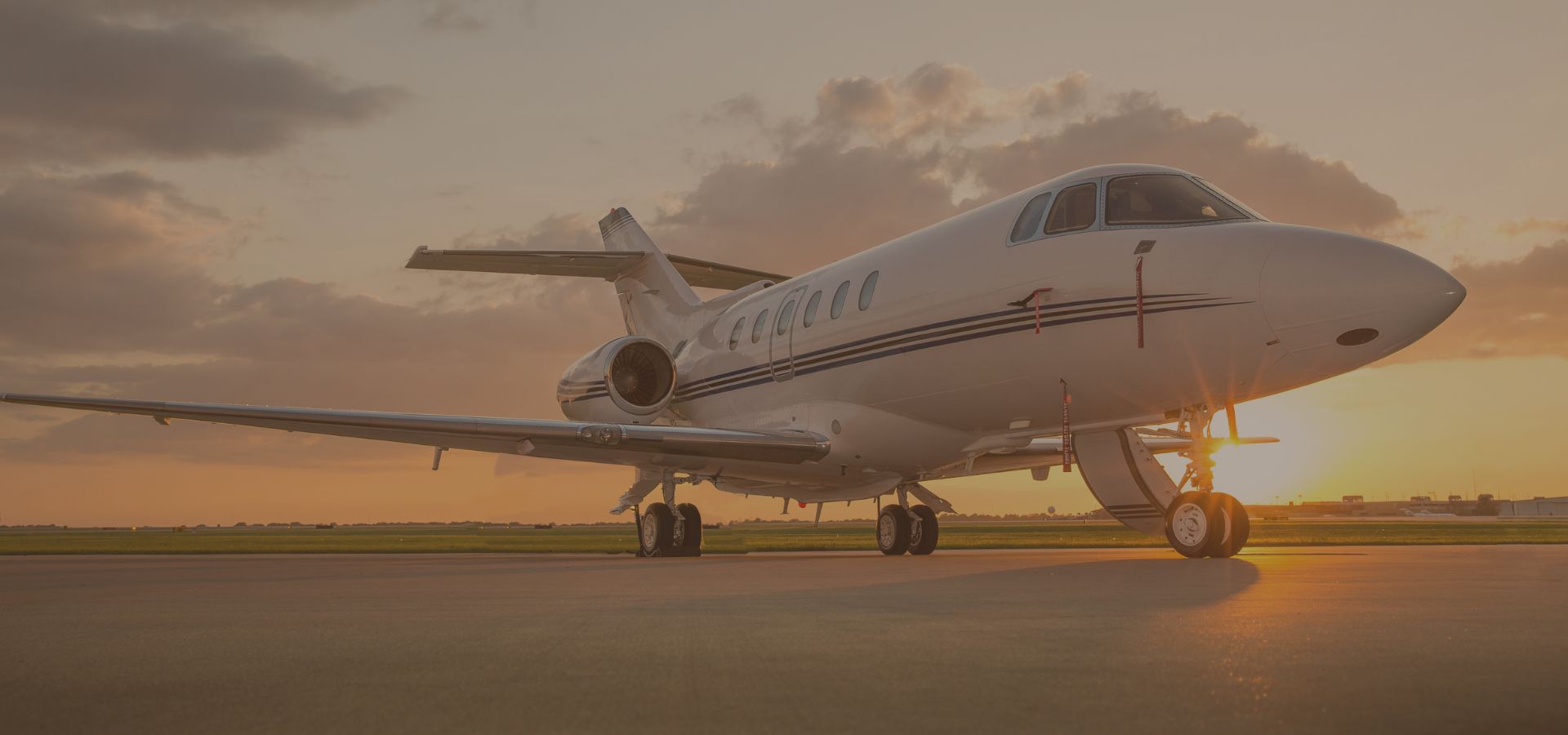
Private jets have the technical ability to land on much shorter runways and at local airports.
The practical example: If you want to ski in Courchevel or attend a meeting in a remote area of Tuscany:
Commercial: You fly to Geneva or Milan and then drive for 3 hours.
Private: You land at a local airfield 20 minutes from your destination.
The private jet turns a full day's journey into a couple of hours' trip.
3. Genuine Privacy and Confidentiality
In First Class, you have a comfortable seat, perhaps even a small suite with a door. But you are still surrounded by strangers. Holding a confidential business meeting, reviewing sensitive contracts, or simply relaxing without fear of being recognized is complicated.
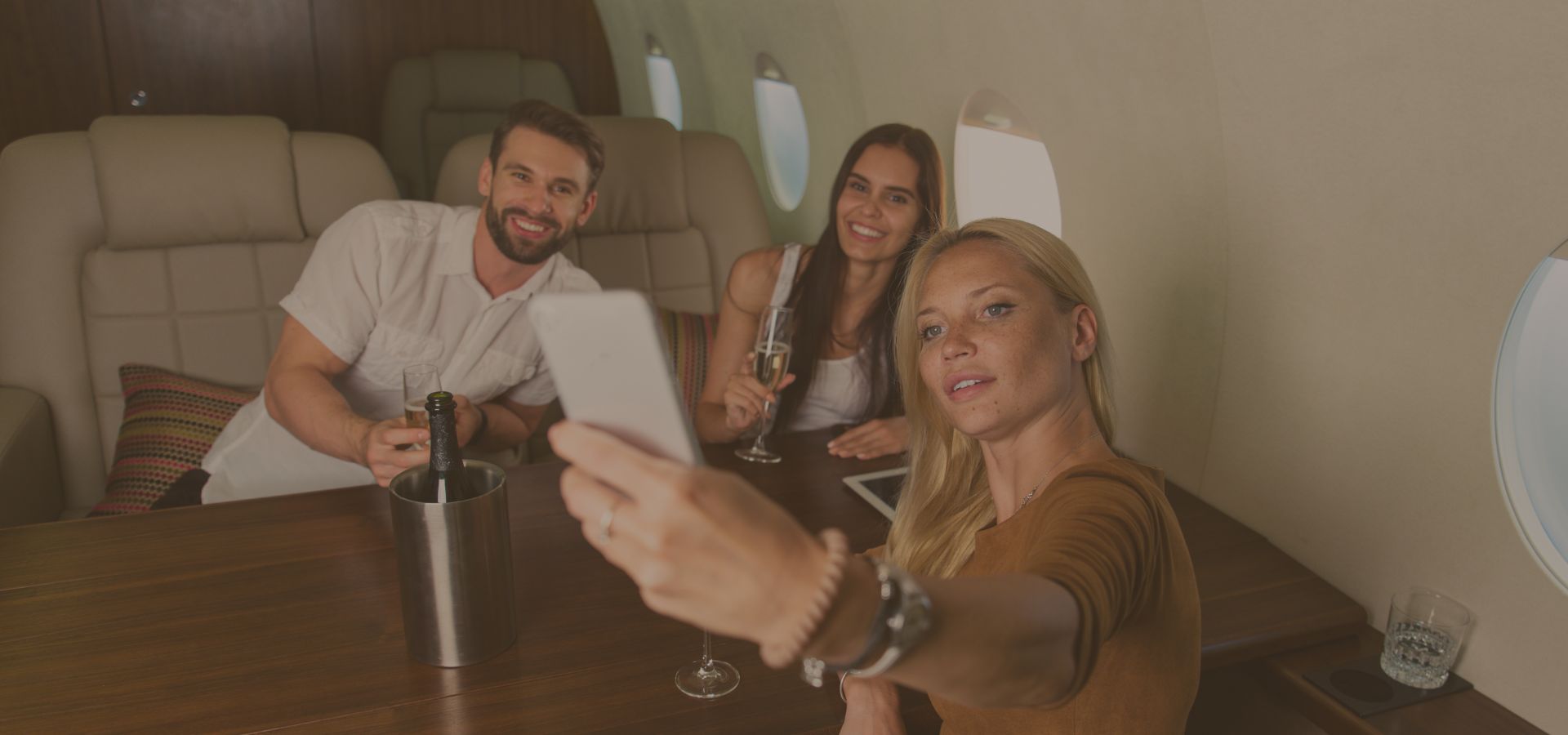
In a private jet, the cabin is your boardroom or your living room. You can discuss business strategies with your team with complete freedom or enjoy time with your family without worrying about disturbing or being disturbed. What happens aboard, stays aboard.
4. You Set the Schedule (and the Plane Awaits You)
On a commercial airline, you adapt to the plane. If the meeting runs late or traffic delays you, you miss the flight and potentially an important connection.
When renting a private jet, the plane adapts to you. Has the meeting extended by an hour? You call your flight manager and the aircraft waits for you. Have you finished ahead of schedule? You can depart earlier. This flexibility completely eliminates travel stress. You no longer rush to catch a plane; the plane is there for when you are ready.
5. Luggage and Pets: No Separations
For many of our clients, this is the decisive emotional factor.
Pets: Commercially, unless they are very small, dogs travel in the hold, a traumatic experience for the animal and stressful for the owner. On a private jet, your pet travels with you in the cabin, at your feet or in the seat next to you.
Luggage: Need to carry large product samples, golf equipment, skis, or extra delicate luggage? In the private jet, you directly supervise how they are loaded into the hold, and in many models, you even have access to the luggage during flight. The risk of lost luggage is virtually zero.
Conclusion: Cost or Investment?
If we only compare ticket prices, A vs B, commercial First Class will always be more economical. But if you include in the equation:
The value of the hours saved.
The cost of extra hotels or transfers avoided by landing closer.
The ability to return in the same day (avoiding nights away from home).
The productivity gained during the flight.
The balance shifts. Renting a private jet is not just buying luxury; it is purchasing superior logistics and reclaiming your time.
Do you have a complex trip in mind? Request a no-obligation quote and compare not only the price but the complete door-to-door itinerary with your habitual commercial option. You will be surprised by the difference.
If you are reading this, it is likely that you are already familiar with the advantages of traveling at the front of the plane. First Class or Business Class on major airlines offer flat beds, chef-prepared menus, and VIP lounges. Without a doubt, it is a comfortable way to travel.
However, there is a reality that not even the best first-class suite can avoid: you remain bound by the rules, schedules, and logistics of a commercial airline. You are still just another passenger in a massive system.
At JustFly Executive, many of our clients began flying commercially and transitioned seeking something money cannot buy in a traditional airline: absolute control over their time.
Here, we examine the 5 real operational differences between both options to help you decide if it is time to make the leap.
1. The Value of Time: 2 Hours vs. 15 Minutes
This is the most tangible difference. On a commercial flight, even with "Fast Track" access, you are required to arrive at the airport well in advance (at least 60-90 minutes for international flights). You must pass through extensive security checks, walk to the boarding gate, and wait for hundreds of passengers to board.
In private aviation: You arrive at the Executive Terminal (FBO) only 15 or 20 minutes before the departure time.
No lines.
No removing your shoes at security.
The pilot greets you at reception, escorts you to the aircraft, and you take off.
On a round trip, a private jet can easily save you between 3 and 5 hours of "dead time" at airports. What is the value of your working hour or your free time?
2. Access to 10 Times More Airports (Arrive Closer)
Commercial airlines use large aircraft that require long runways and complex infrastructure. This limits them to major hub airports, which are often far from the final destination and congested.
Private jets have the technical ability to land on much shorter runways and at local airports.
The practical example: If you want to ski in Courchevel or attend a meeting in a remote area of Tuscany:
Commercial: You fly to Geneva or Milan and then drive for 3 hours.
Private: You land at a local airfield 20 minutes from your destination.
The private jet turns a full day's journey into a couple of hours' trip.
3. Genuine Privacy and Confidentiality
In First Class, you have a comfortable seat, perhaps even a small suite with a door. But you are still surrounded by strangers. Holding a confidential business meeting, reviewing sensitive contracts, or simply relaxing without fear of being recognized is complicated.
In a private jet, the cabin is your boardroom or your living room. You can discuss business strategies with your team with complete freedom or enjoy time with your family without worrying about disturbing or being disturbed. What happens aboard, stays aboard.
4. You Set the Schedule (and the Plane Awaits You)
On a commercial airline, you adapt to the plane. If the meeting runs late or traffic delays you, you miss the flight and potentially an important connection.
When renting a private jet, the plane adapts to you. Has the meeting extended by an hour? You call your flight manager and the aircraft waits for you. Have you finished ahead of schedule? You can depart earlier. This flexibility completely eliminates travel stress. You no longer rush to catch a plane; the plane is there for when you are ready.
5. Luggage and Pets: No Separations
For many of our clients, this is the decisive emotional factor.
Pets: Commercially, unless they are very small, dogs travel in the hold, a traumatic experience for the animal and stressful for the owner. On a private jet, your pet travels with you in the cabin, at your feet or in the seat next to you.
Luggage: Need to carry large product samples, golf equipment, skis, or extra delicate luggage? In the private jet, you directly supervise how they are loaded into the hold, and in many models, you even have access to the luggage during flight. The risk of lost luggage is virtually zero.
Conclusion: Cost or Investment?
If we only compare ticket prices, A vs B, commercial First Class will always be more economical. But if you include in the equation:
The value of the hours saved.
The cost of extra hotels or transfers avoided by landing closer.
The ability to return in the same day (avoiding nights away from home).
The productivity gained during the flight.
The balance shifts. Renting a private jet is not just buying luxury; it is purchasing superior logistics and reclaiming your time.
Do you have a complex trip in mind? Request a no-obligation quote and compare not only the price but the complete door-to-door itinerary with your habitual commercial option. You will be surprised by the difference.